You have decided to invest in ceramic coating for your vehicle. That is an excellent decision — ceramic coating provides years of protection against UV damage, chemical contaminants, water spots, and environmental hazards. But before that coating goes on, there is a critical question every vehicle owner needs to answer: should you get paint correction first?
The short answer is almost always yes. And in this comprehensive guide, we will explain exactly why paint correction before ceramic coating is not just recommended — it is essential for achieving the best possible results and maximizing the value of your investment.
What Is Paint Correction?
Paint correction is the process of removing imperfections from your vehicle's clear coat through machine polishing. These imperfections include swirl marks, fine scratches, water spot etching, oxidation, haze, and other surface defects that diminish your paint's clarity and gloss. The process uses specialized polishing machines, pads, and compounds to carefully level the clear coat, eliminating defects and restoring a smooth, reflective surface.
Paint correction is categorized by stages, with each stage representing a pass with a different combination of pad and compound:
- Single-Stage Correction: One polishing pass to remove light swirl marks and minor imperfections. Suitable for newer vehicles or those in relatively good condition. Typically removes 50-70% of visible defects.
- Two-Stage Correction: A cutting pass to remove deeper defects followed by a finishing pass to refine the surface to a high gloss. This is the most common level of correction for vehicles with moderate wear. Removes 80-95% of visible defects.
- Multi-Stage Correction: Three or more passes for severely neglected or damaged paint. This level of correction is reserved for vehicles with heavy swirling, deep scratches, or significant oxidation. Can remove up to 99% of correctable defects.
Why Paint Correction Before Ceramic Coating Matters
Here is the fundamental truth about ceramic coating that many vehicle owners do not understand: ceramic coating does not hide imperfections — it amplifies them. Ceramic coating adds incredible depth and clarity to your paint, which means every swirl mark, scratch, and water spot that exists in your clear coat will become more visible after the coating is applied, not less.
Think of it this way. Ceramic coating is like applying a magnifying glass to your paint. If your paint is flawless, the coating will make it look absolutely stunning — deeper, glossier, and more vibrant than you thought possible. But if your paint has swirl marks and scratches, the coating will lock those defects in and make them more prominent under direct light.
This is why professional detailers like our team at Ascend Detail always recommend paint correction before ceramic coating. The correction removes the defects, and the coating locks in that corrected, flawless finish for years to come. It is the combination of both services that delivers truly exceptional results.
What Paint Correction Fixes
The defects that paint correction addresses are more common than most vehicle owners realize. Even brand-new vehicles from the dealership often have swirl marks and imperfections from improper washing during transport and dealer preparation. Here are the most common defects that paint correction eliminates:
Swirl Marks: The circular, spider-web-like scratches that are most visible in direct sunlight. These are caused by improper washing techniques, automatic car washes, and dirty wash mitts. Swirl marks are the most common paint defect and are present on virtually every vehicle that has been washed more than a few times.
Fine Scratches: Light scratches from fingernails, clothing, keys, and general contact. These are shallower than deep scratches and can typically be removed through single or two-stage correction.
Water Spot Etching: Mineral deposits from hard water that have etched into the clear coat, leaving permanent marks. This is extremely common in California, where hard water and intense sun combine to create ideal conditions for water spot formation.
Oxidation: The dulling and chalking of paint caused by prolonged UV exposure. Common on vehicles that have been parked outdoors in California for extended periods without protection.
Haze and Hologramming: Cloudy or ghosted areas in the clear coat, often caused by previous inexperienced polishing attempts using improper techniques or products.
Bird Dropping and Sap Etching: Permanent marks left by bird droppings and tree sap that have eaten into the clear coat. These are particularly common in California due to the state's diverse wildlife and vegetation.
The Paint Correction Process at Ascend Detail
When you bring your vehicle to Ascend Detail for paint correction, our process is methodical, thorough, and tailored to your vehicle's specific needs. Here is what to expect:
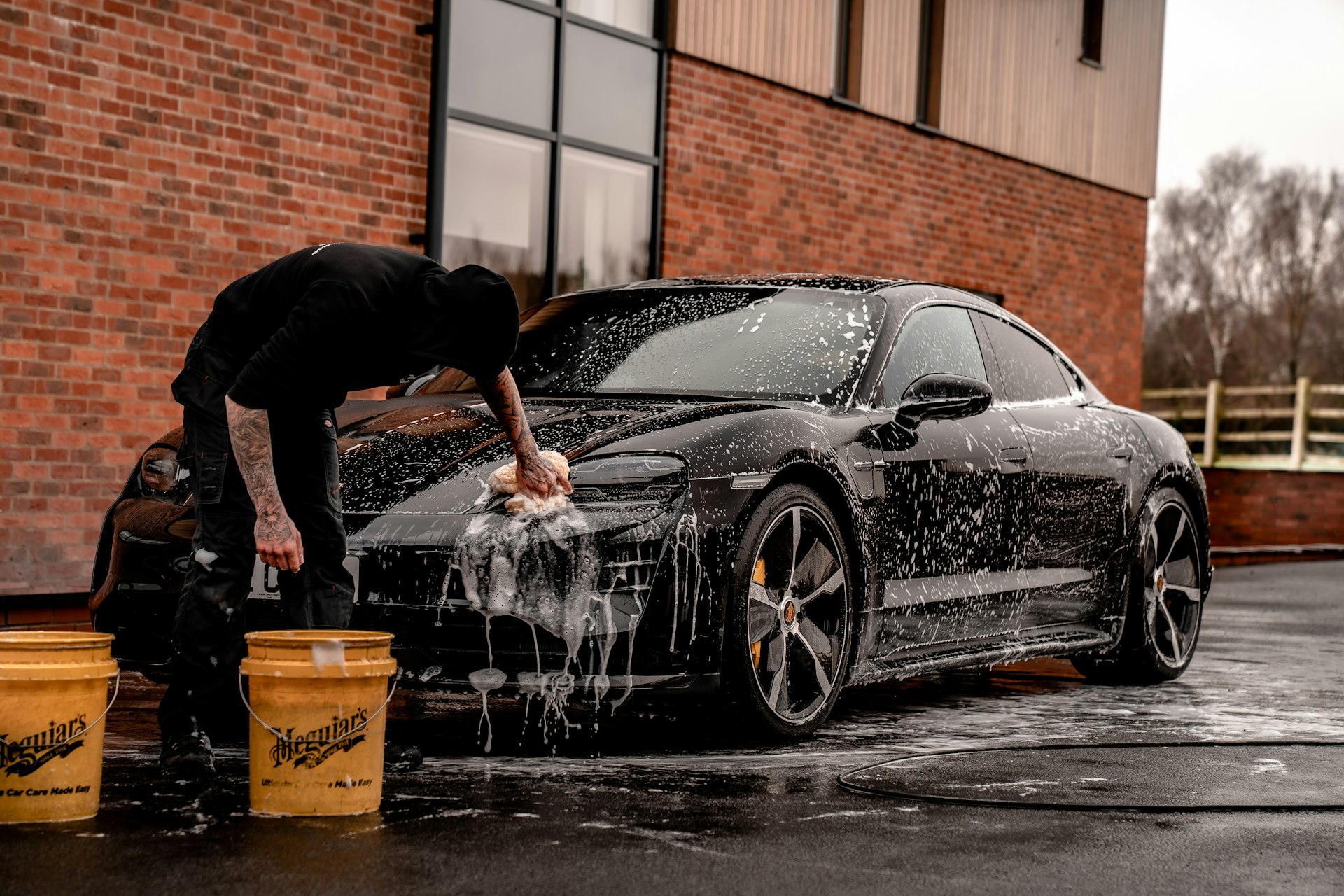
Step 1: Thorough Wash and Decontamination. We begin with a comprehensive hand wash using pH-neutral shampoo, followed by a clay bar treatment to remove bonded contaminants like industrial fallout, overspray, and embedded particles. This creates a perfectly clean surface for the polishing stage.
Step 2: Paint Inspection. Using specialized LED lighting and paint depth gauges, we inspect every panel of your vehicle to assess the type and severity of defects present. This inspection determines the appropriate level of correction and ensures we have a clear understanding of what needs to be addressed.
Step 3: Machine Polishing. Using professional dual-action and rotary polishers, we systematically work through each panel of your vehicle, removing defects with precisely selected pad and compound combinations. This is the most time-intensive stage and requires significant skill and experience to execute without introducing new defects.
Step 4: Refinement. After the cutting stage, we perform a finishing pass to refine the surface to a mirror-like gloss. This step removes any remaining micro-marring from the cutting stage and prepares the surface for ceramic coating application.
Step 5: Final Inspection. We perform a thorough final inspection under multiple lighting conditions to verify that all correctable defects have been addressed and the surface is ready for coating.
The Cost of Skipping Paint Correction
Some vehicle owners consider skipping paint correction to save money on their ceramic coating project. While we understand the temptation, this is almost always a false economy. Here is why:
First, ceramic coating is a semi-permanent product. Once applied, it bonds to your clear coat and lasts for years. If your paint has defects when the coating is applied, those defects are essentially sealed in for the life of the coating. Removing them later requires stripping the coating, performing the correction, and reapplying the coating — which costs significantly more than doing it correctly the first time.
Second, the visual impact of ceramic coating on corrected paint versus uncorrected paint is dramatic. A ceramic-coated vehicle with proper paint correction will have a depth, gloss, and clarity that is genuinely breathtaking. The same coating on uncorrected paint will look decent, but it will never achieve that same level of visual impact.
Third, paint correction preserves your clear coat's longevity. By removing surface contamination and defects, you are creating the ideal bonding surface for the ceramic coating, which means better adhesion, longer coating life, and more effective protection.
Who Needs Paint Correction Before Ceramic Coating?
In our experience, virtually every vehicle benefits from at least some level of paint correction before ceramic coating. However, the level of correction needed varies:
- Brand-new vehicles (0-6 months): Typically need a single-stage polish to remove dealer-induced swirl marks and transport defects
- Well-maintained vehicles (1-3 years): Usually benefit from a two-stage correction to address accumulated wash marks and light environmental damage
- Daily drivers (3+ years): Often require a full two-stage or multi-stage correction to address years of swirl marks, scratches, and environmental wear
- Neglected or heavily damaged paint: May need multi-stage correction with specialized compounds and techniques
Trust the Experts at Ascend Detail
At Ascend Detail, paint correction and ceramic coating are two of our most requested services, and we have refined our process through years of experience on everything from daily drivers to exotic hypercars like Bugatti, Koenigsegg, and Pagani. Our team understands the nuances of different paint systems, clear coat thicknesses, and polishing techniques required to achieve flawless results without compromising your vehicle's factory paint.
We serve Solano County, Monterey County, and surrounding areas throughout California with our fully mobile service. Whether your vehicle is at home, at your office, or in your hangar, we come to you with everything needed to transform your paint.
Ready to see the difference that professional paint correction and ceramic coating can make? Get your free quote today and let us show you what your vehicle is truly capable of looking like.